
During the Blizzard of 1994 in Maryland, Thousands of homes and commercial properties dealt with damages from heavy accumulations of snow, which caused many roofs to collapse from the weight of the snow. At the beginning the concern was the amount of weight on the roofs, but that quickly shifted to ice dams as the snow started to melt and refreeze.
Click here to see a video of how ice dams form
What Is An Ice Dam?
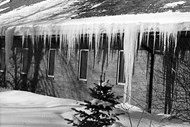 An ice dam is a buildup of water that is formed from melting snow on the roof, then runs down the slope of the roof and then forms into ice near the outside wall of the house. This is usually at the soffits where there is slightly cooler air because its located past the heated areas of the home, but where cooler air is drawn into the attic from the vents in the soffit. It may only be a difference of 1 Degree but if temperatures are low enough, that’s all that’s needed for the water to freeze. Through constant fluctuations in temperature, a wall of ice is formed across the roof and water begins to build up behind it. Once the pond of water behind the ice dam is deep enough, it starts to back flow into the exterior walls of the house. Ice dams are usually formed very slowly, so it may take a day or two for the water leaking into the walls to be noticeable, but when this happens it can cause water damage to the walls and ceilings of every floor of the house below it.
Ice Dams are not the only thing that can cause damages!
As I mentioned earlier, when the ice dams started forming on homes back in 1994, the Media started recommending that people hire contractors to remove the gutters from homes to remove the ice dams, and to prevent more from forming. While this advice was intended to help, it made matters worse! By the time I was able to contact the media hundreds of homes had been damaged by contractors on top of the damage that the ice dams had caused. Because when the gutters were torn down, there were Hundreds of pounds of ice frozen on them, and to the roofing, which ripped shingles off the roofs, and in many cases ripped out the fascia and soffits as well. Some windows were damaged as the gutters swung down and hit the sides of homes, cars and some contractors. But it was about to get worse, because as the rest of the snow on the rooftops melted, it was no longer diverted away from the homes by the gutters, so it dropped right next to the foundation of the homes and flooded their basements as well.
As soon as I was able to reach the Media, I explained to them why their recommendation was a mistake. Then I set up interviews with all of the local TV stations to come out to a couple of our job sites, so we could explain what caused ice dams, how to remove them safely without causing more damages, and what needed to be done to prevent them in the future.
Some other contractors were shown removing ice dams using hammers, axes and chainsaws which can easily damage roofs. One contractor decided to use a blow torch to “melt” the snow from rooftops and set a house on fire in Maryland. I have also heard of contractors using water to melt the snow off of roofs or using power washers to “Blast” through the ice and melt the snow. Using a regular power washer like this is a recipe for disaster! If you spray water on the roof it will usually refreeze immediately, which will only add more weight to the roofing support structure that may already be over capacity.
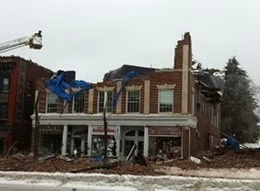 This photo shows an incident where one contractor caused an entire 3 story brick building to collapse in Middletown Connecticut in 2011, by using water to melt the snow from the roof.
How To Remove Ice Dams The “Right Way!”
In my opinion, the best and safest method to remove ice dams from roofs is to use roof rakes to pull the excess snow off the roof from a ladder. Then chip a couple of small channels in the ice dam so the water behind the ice dam, and the remaining snow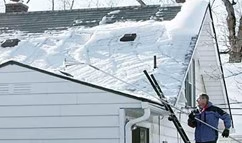 on the roof will be able to melt and run off the roof. You can also use some brands of ice melt that are safe for roofing and the gutters that can speed this process up a bit. This can also be used as a preventative measure on homes that consistently have problems with ice dams. If your careful and know what you are doing, you can also use a hot water pressure washer that is capable of producing steam. Then if your careful, you can safely cut out the ice dam without adding more water on the roof. This is a method we use occasionally but I don’t recommend it to most contractors because it can be dangerous. A hot water pressure washer or steam unit creates a very thick cloud of fog which makes it nearly impossible to see, and the refreezing water can coat the ladder rungs, and anything it lands on in the area with ice, which could turn into a deadly situation if you are on a ladder!
How To Prevent Ice Dams
To prevent ice dams from forming, the attic needs to be checked to locate and seal air leaks from the heated areas of the home, and the insulation levels should also be checked to ensure that there is enough insulation in the attic. Once that has been done, the attic should also be checked for proper ventilation. One of the most common recommendations for proper ventilation is one square foot of vent for every 150 square foot of attic space. But, each climate region has different recommendations, so always get a recommendation from a Licensed local insulation service. An electronic ventilation fan with a thermostat that turns the fan on when the temperatures reach a certain point can also help. These fans can also be used in the summer to keep heat out of the attic.
Henry Bockman
Bockman is an approved instructor for the Power Washers of North America and was involved in teaching, and creating courses for the PWNA, Alliance Trade Educations Services and the Contractors Foundation. Bockman served on the Board of Directors for the PWNA, as the Chairman of the communications committee, PWNA Webmaster, PWNA BBS Administrator, creator of Clean Across America campaign, and as the President and a founding member of the Maryland State Chapter of PWNA. Bockman has received The Daily Points Of Light Award, a PWNA Marketing award, the Joe Walters Award, letters of recognition from The President Of The United States and the Governor of Maryland. He has been involved with different government agencies consisting of the Historical Society, the Maryland Home Improvement Commission, the Rockville City EPA, Montgomery County EPA and the State of Maryland EPA regarding power washing and EPA compliant cleaning methods.